Published

Lemon drizzle cake

From Alison Bradley via Bernie Baldwin, with alterations
Makes one 1lb loaf

The original recipe called for baking at 175C for 50 minutes. I found that my cake always ended up over-baked (never Bernie’s interestingly, hers is always great!) so reduced the temperature and length. It also called for 85 g self raising flour. Since that’s tricky to find in the US, I’ve switched to all purpose flour and some baking powder, with a tad more salt. I also added the dusting of powdered sugar just because I think it looks nice.

Bernie and Alison originally made this in a 1lb loaf tin. I’ve retained that here, but will say that this recipe works well doubled in an 8 inch circular cake pan as well. Just make sure that you line it in a way that will make it easy to remove without inverting the delicate soaked cake.

Preheat the oven to 165C (325F), and line a 1lb loaf tin1 with parchment.

In a large bowl, beat together 57 g (¼ c, ½ stick) softened butter2, 70 g (⅜ c + 1 T) granulated sugar, 1 large egg3, 2 T milk, a good pinch of salt, and the zest of ½ lemon.

In a separate bowl, mix together 85 g (⅔ c) all purpose flour and 1 tsp baking powder. Stir the dry ingredients in to the wet just until combined.

Pour in to the loaf tin and bake 40 minutes at 165C (325F). It’s done when a toothpick comes out clean, or when an instant read thermometer reads about 96C (205F).

While the cake is baking, prepare the lemon drizzle. This is very much a “to taste” part of the recipe. I prefer a very tart, thin drizzle that soaks thoroughly in to the cake so I tend to mix the juice of ½ lemon with as many tablespoons of icing sugar as it takes to just barely curb the sourness. Other folks might prefer more of a glaze that sits on top, so a greater quantity of icing sugar to lemon juice. Whatever you prefer, mix it together and set it aside.

When the cake is done, remove the tin from the oven and place it on a cooling rack. Poke holes from the top of cake all the way through with a skewer, then slowly and carefully pour the drizzle over every part of the cake so that it soaks through. Leave it to cool at least halfway so that it firms up a little, then remove the cake from the tin. Generously sprinkle icing sugar over the top if desired.


  1. I can never remember if my loaf tin is 1lb or 2lbs. The rule of thumb I now use is if it seems “normal”, sort of pound-cake-sized, it’s probably a 1lb tin. If it seems hefty, more the sort of thing you’d use to bake a nearly full-sized loaf of bread, it’s probably a 2lb tin. If you only have a 2lb loaf tin, you’ll need to double or even triple the recipe, and it will take around 10–15 minutes longer to bake. If you have two 1lb loaf tins, consider making two cakes and freezing one for later since it freezes well. ↩
  2. The quickest way I know to soften a stick of butter (at least for a standard shape stick in the US) is to microwave it on half power with the paper on rotating it every 5 seconds until it is just soft enough. ↩
  3. Egg sizes aren’t standard across the world, so for better results, you might want to adjust how much egg you use depending on where you live. Wikipedia has a good article on egg sizes, though keep in mind that these measurements include the weight of the shell (around 8% of the egg weight, supposedly). This is a British recipe, so one large egg should be at least 63g and no more than 72g. In the US, in theory this means that you should ideally use one very large / XL egg. That said, I’ve used a large American egg many times in the past with no problem. ↩
Published

To read: “Maintenance and Care” by Shannon Mattern for Places

Read the article “Maintenance and Care: A working guide to the repair of rust, dust, cracks, and corrupted code in our cities, our homes, and our social relations” by Shannon Mattern for Places, published in November 2018.

Yet even if we build an army of repair robots (a longtime sci-fi dream) and maintenance AIs, their hardware and software will still require upkeep. They’ll still depend upon well-maintained, interoperable technical infrastructures. They’ll still require cleaning staff — “industrial hygienists” — to maintain pristine conditions for their manufacture. We’ll need curators to clean the data and supervisors for the robot cleaning crew. Labor is essential to maintenance.

As Jay Owens reminds us,

There will be dust. There is always dust. By that I mean there is always time, and materiality, and decay. Decomposition and damage are inescapable. There is always the body, with its smears and secretions and messy flaking bits off. There is always waste and it always has to be dealt with, and shipping it out of sight overseas to the developing world does not change the fact this work has to be done (and it is dirty, dangerous work that demands its pound of flesh).

That’s true whether we’re talking about ditch-digging or dam-building or data-diving. Maintenance at any particular site, or on any particular body or object, requires the maintenance of an entire ecology: attending to supply chains, instruments, protocols, social infrastructures, and environmental conditions.

A lot of this relates to the push and pull between maintenance and innovation, how much more attractive innovation, the shiny and new, is in the public consciousness.

This brings me back, yet again, to Ursula K. Le Guin’s The Carrier Bag Theory of Fiction. The heroic versus the contemplative, the careful. The spear versus the receptacle. The linear versus the cyclical. Resolution versus the infinite.

What about a Carrier Bag Theory of Everything?

Published

Growing up in a DDT dumping ground

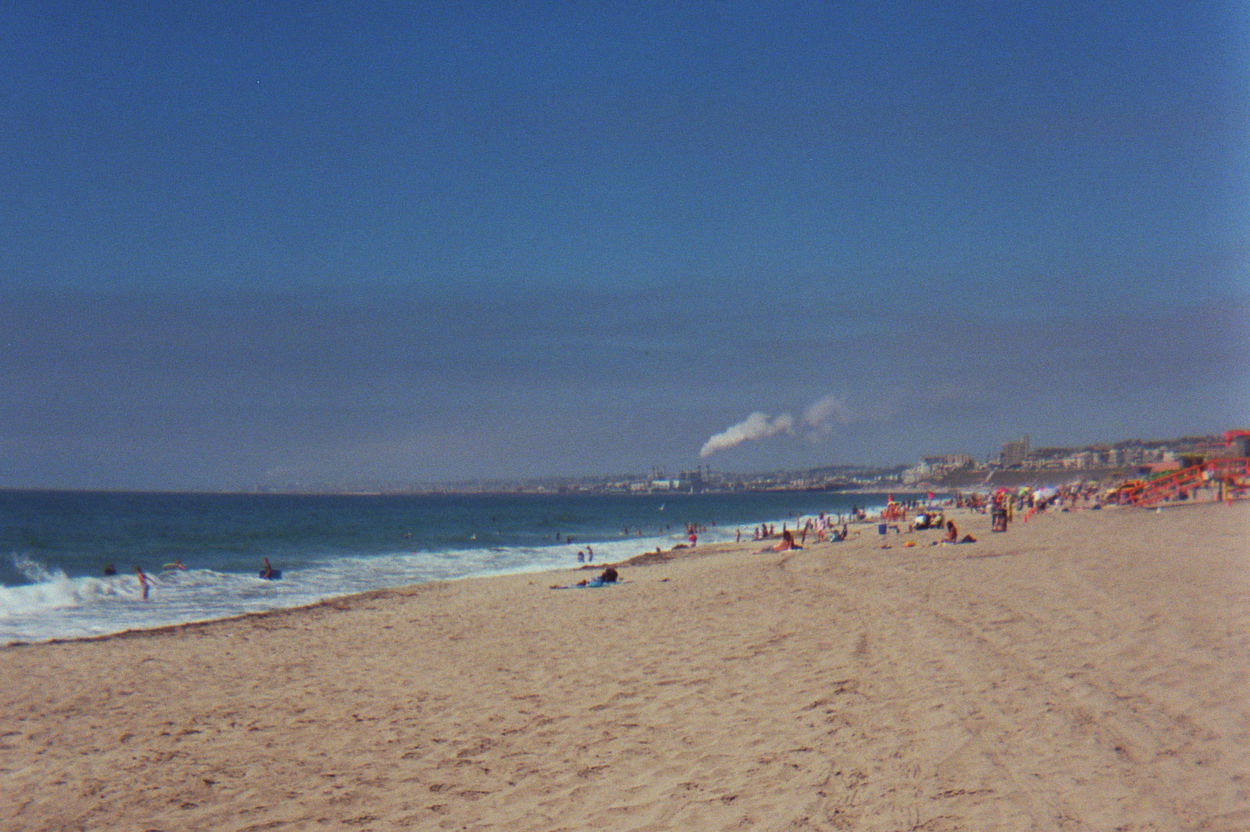
Rat beach near Torrance, California in 2010

Rat Beach in 2010

I came across the article below recently and was pretty floored.

“How the waters off Catalina became a DDT dumping ground” by Rosanna Xia for the LA Times, 25 October 2020

I grew up in Torrance till I was 5 and Palos Verdes until I was 13. I played in the ocean at Rat Beach all the time, caught tadpoles in the storm drain just next to PVBAC, went tidepooling in Abalone Cove. I had no idea about the Superfund site, this is the very first time I’ve heard of it. How on earth is that?

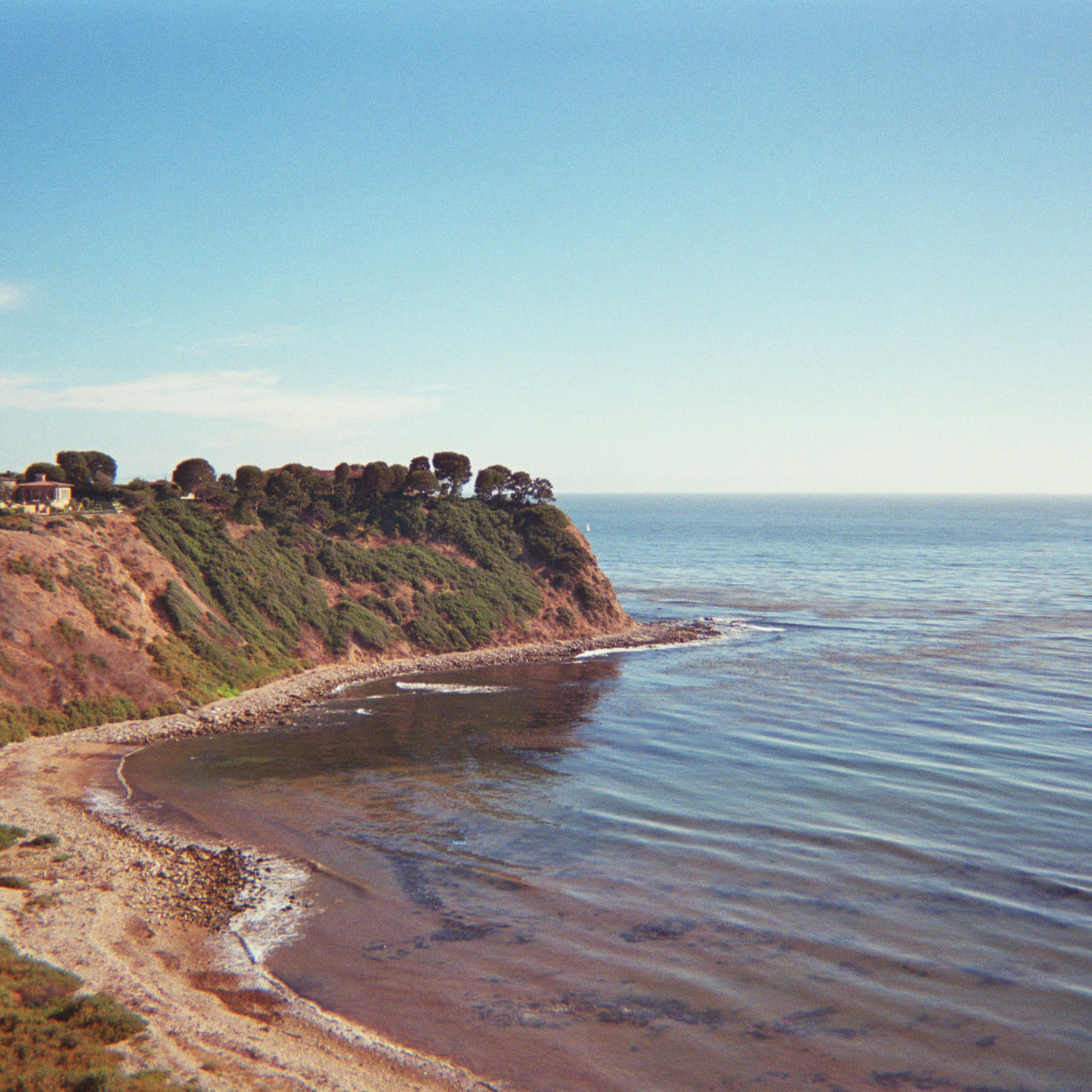
Lunada Bay in Southern California, 2010

Lunada bay in 2010

It looks like the Superfund site starts just south of Lunada Bay and gets worse as you pass Portuguese Bend down towards San Pedro (see map).

And now they’ve verified punctured DDT waste barrels that have been sitting on the sea floor just off Catalina, possibly since the 1980s. This could be three to four decades of leakage from up to half a million barrels.

They leaned in to examine an icicle-like anomaly growing off one of the barrels — a “toxicle,” they called it — and wondered about the gas that bubbled out when the robot snapped one off. To have gas supersaturated in and around these barrels so deep underwater, where the pressure was 90 times greater than above ground, was unsettling. They couldn’t help but feel like they were poking at a giant Coke can ready to explode.

Sea lions up and down the coast have been dying from it for decades, and still are. We eat a lot of seafood from these waters.

How can this possibly be cleaned up, and who on earth is going to pay for it? Certainly not the Montrose Chemical Corp. of California, they’ve been gone for years.

It’s just so exhausting. It feels like so many people’s jobs right this moment are simply running around slapping Bandaids left right and center, scrambling to fix what have become systemic problems caused by the poor decision making of people in the past. Lack of foresight, deliberately turning a blind eye, “we’ll deal with it later”, “it can’t possibly be that bad”. The environment, tech, policing, advertising.

So much firefighting.

Published

To read: “Grieving: Dispatches from a Wounded Country” by Cristina Rivera Garza

A friend+co-conspirator from FemOS recommended Grieving: Dispatches from a Wounded Country by Cristina Rivera Garza recently, looks incredible. In her words:

It discusses histories of trauma and violence in Mexico, but I think also speaks to people encountering trauma in their work or daily lives, and how to process or experience that through collective grieving. She posits Mexico as a “visceraless state,” where the government has assumed a solely administrative function, and thus has left the citizens are disembodied. Apt language to describe how states around the world are grappling with the pandemic…

Feminist Press (publisher) | Biblio.com (secondhand) | Bookshop.org

Published

Current listening: “The Best of the Alessi Brothers”

Currently listening to The Best Of The Alessi Brothers (1998). Had no idea about them, came across them via two cool cats on Twitter.

These vibes are the perfect thing right now. Also, will be taking photos of the Alessi Bros to the hairdresser when that’s an option again.

Apple Music | Spotify

The album’s not on Bandcamp, but “Seabird” is included in Late Night Tales: Metronomy.

Published

Well, that was expected

Yesterday was a month long. As this guy said, maybe it’s just December 37, 2020. Of course everything would just get worse in 2021.

I’d call this a comedy of errors if it wasn’t so bone-achingly depressing. I’m recording some questions and thoughts here because I don’t want to forget what actually happened. There’s so much gaslighting already.

Here’s a timeline of what I feel are the more salient events from yesterday. This is pulled together mainly from news sources and tweets from journalists, times are linked to sources.

Read more (or don’t, it’s exhausting)